Coffee strength is not mysterious. It is math. The ratio of coffee grounds to water determines how concentrated your cup will be — and there are well-established optimal ratios for every brewing method. Get the ratio right and you have solved half the puzzle of making great coffee at home.
The Golden Ratio
The Specialty Coffee Association (SCA) defines the “Golden Ratio” for brewed coffee as 1:15 to 1:18 — meaning 1 gram of coffee for every 15–18 grams of water. This range produces coffee within the “ideal extraction zone” for most people’s taste preferences.
1:15 produces a stronger, fuller cup. 1:18 produces a lighter, more delicate cup. Most coffee professionals start at 1:16 and adjust from there.
Why grams? Volume measurements (tablespoons, cups) are inconsistent because coffee density varies dramatically between grind sizes and bean types. Weight measurements in grams are precise and repeatable. Use a kitchen scale.
Ratios by Brewing Method
| Brewing Method | Ratio (coffee:water) | Example |
|---|---|---|
| Drip coffee maker | 1:15 to 1:17 | 30g coffee + 450ml water |
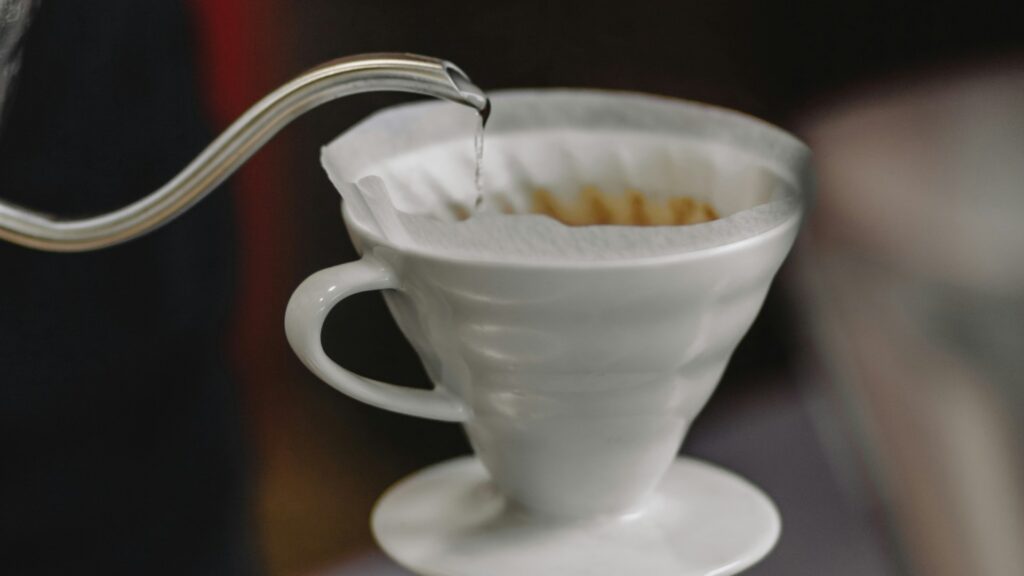
| Pour over (V60) | 1:15 to 1:17 | 20g coffee + 320ml water |
| Chemex | 1:15 to 1:17 | 42g coffee + 700ml water |
| French press | 1:12 to 1:15 | 30g coffee + 400ml water |
| AeroPress (concentrate) | 1:6 to 1:8 | 15g coffee + 100ml water |
| Espresso | 1:2 to 1:2.5 | 18g coffee + 36–45g liquid |
| Cold brew concentrate | 1:4 to 1:5 | 100g coffee + 500ml water |
| Cold brew (ready to drink) | 1:8 | 100g coffee + 800ml water |
| Moka pot | 1:7 to 1:10 | Fill basket + water to valve |
How to Measure Without a Scale
While a scale is the most accurate method, you can approximate ratios using volume:
- 1 tablespoon of whole bean coffee = approximately 5g
- 1 tablespoon of ground coffee = approximately 7g
- 1 cup of water = 236ml = 236g
For a 1:16 ratio using a drip maker: 2 tablespoons ground coffee per 6 oz water (or roughly 1 tablespoon per 3 oz). This is a reasonable starting point, though scales are more reliable.
Adjusting Strength
If your coffee is too strong: Use more water, not less coffee. Reducing coffee below the optimal range risks under-extraction.
If your coffee is too weak: Use more coffee, not less water. Adding water after brewing (like an Americano) is a better way to dilute than brewing at an under-strength ratio.
Note the difference between strength and extraction:
- Strength = concentration of dissolved solids (controlled by ratio)
- Extraction = how much of the coffee’s flavors were pulled out (controlled by grind, temperature, time)
Your coffee can be the right strength but taste sour (under-extracted) or bitter (over-extracted) even with a perfect ratio if other variables are off.
The Scale to Use
For home coffee brewing, any kitchen scale that measures in grams with 1g precision is sufficient for drip, French press, and pour over. For espresso, you need 0.1g precision to dial in the 1:2 output ratio accurately. A dedicated coffee scale with a built-in timer (useful for tracking pour over pour sequences) is available from brands like Acaia and Hario for $30–$200. As an Amazon Associate I earn from qualifying purchases.
Frequently Asked Questions About Coffee Ratios
How many tablespoons of coffee per cup?
The general rule is 1–2 tablespoons per 6 oz of water, depending on desired strength. For a “standard” cup (8 oz), use 2 tablespoons of ground coffee. But measuring by weight is significantly more accurate.
Why does my drip maker produce weak coffee even with the right ratio?
The brew temperature is likely too low. Many budget drip machines brew below 195°F — the minimum for proper extraction. Water below 195°F cannot fully extract flavor compounds, producing weak, underdeveloped coffee regardless of ratio.
What is a 1:16 ratio in cups?
1:16 means 1g of coffee for every 16g of water. For a 12 oz (355ml/355g) pot: 355 ÷ 16 = ~22g of coffee. That is approximately 3 tablespoons of ground coffee for a full 12 oz mug.
Is the coffee to water ratio the same for hot and cold brew?
No. Cold brew requires a much higher coffee concentration (1:4 to 1:8) because cold water extracts far less efficiently than hot water. The long steep time compensates, but you still need much more coffee.
Does the type of coffee bean change the ideal ratio?
Slightly. Denser, higher-altitude beans often need slightly less coffee by volume (they are heavier per tablespoon). This is one reason weight measurement is more reliable than volume — a gram of any bean is always a gram.
Getting your ratio right is one of the most immediately impactful adjustments you can make to home brewing. Combined with the right grind size, it solves most common coffee problems. See our complete guides on grind size and storing coffee beans.