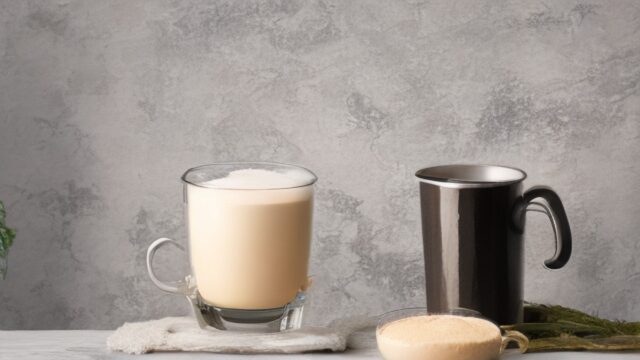
Vietnamese coffee isn’t just coffee with condensed milk stirred in — it’s a distinct brewing tradition built around a specific bean, a specific tool, and a specific ratio that produces something bolder and more intense than most Western coffee styles. If you’ve had it at a Vietnamese restaurant and wondered how to recreate it, here’s everything you need.
What makes Vietnamese coffee different
Three things set Vietnamese coffee apart from a typical American cup:
- The beans. Vietnam is the world’s second-largest coffee producer, and the vast majority of what it grows is Robusta, not Arabica. Robusta has nearly double the caffeine and a bolder, more bitter, chocolatey flavor — a deliberate contrast to the sweetened condensed milk it’s traditionally paired with.
- The roast. Vietnamese coffee is typically roasted very dark, sometimes with a small amount of butter or other flavoring added during roasting in traditional production, giving it a deep, almost smoky intensity.
- The brewer. A small metal drip filter called a phin sits directly on top of the glass or cup, brewing one serving at a time through gravity alone — no paper filter, no machine, no electricity.
What you need
A phin filter (inexpensive and widely available online), coarsely ground dark-roast coffee — ideally Vietnamese robusta, though any dark roast works as a substitute — sweetened condensed milk, and hot water just off the boil.
How to make hot Vietnamese coffee (cà phê sữa nóng)
Spoon 2–3 tablespoons of sweetened condensed milk into the bottom of a glass or cup. Assemble the phin on top: add 2–3 tablespoons of coarsely ground coffee to the brewing chamber, place the perforated press plate on top, and gently twist to level the grounds — don’t tamp hard.
Pour a small amount of hot water (about 2 tablespoons) over the grounds and let it sit for 20–30 seconds — this is the bloom, just like with a pour over. Then fill the phin chamber with hot water, cover with the lid, and let it drip slowly. A full phin typically takes 4–5 minutes to finish dripping — resist the urge to stir or rush it.
Once it has fully dripped through, remove the phin, stir the coffee into the condensed milk at the bottom until fully combined, and drink hot.
How to make Vietnamese iced coffee (cà phê sữa đá)
Brew exactly as above, but once the coffee has finished dripping into the condensed milk, stir well and pour the mixture over a full glass of ice. The proportion of coffee to ice matters — go heavier on ice than you would for a typical iced coffee, since the brew itself is much more concentrated than drip coffee and needs the dilution.
Getting the ratio right
Vietnamese coffee is meant to be strong — noticeably stronger than a typical American cup. If yours tastes weak or watery, use more coffee per phin rather than less water; the traditional method is closer to an espresso-strength concentrate than a drip brew. If it tastes overly bitter, check your grind — the coffee should be coarser than table salt but finer than a French press grind, closer to what you’d use for a drip machine.
Can you make it without a phin?
Yes. A French press or AeroPress can approximate the intensity if you don’t have a phin. Use a 1:8 coffee-to-water ratio (much stronger than a typical French press recipe), brew for 4 minutes, then combine with condensed milk the same way. It won’t be identical — the phin’s slow gravity drip produces a distinct body — but it’s a reasonable substitute if you’re just getting started.
Variations worth trying
- Cà phê trứng (egg coffee) — whipped egg yolk, condensed milk, and sugar beaten into a custard-like foam, poured over hot phin-brewed coffee. Hanoi’s signature variation.
- Cà phê muối (salt coffee) — a small pinch of salted cream on top of iced coffee, popular in Hue, balancing bitterness with a savory edge.
- Coconut coffee — condensed milk swapped or blended with coconut milk for a tropical variation common in southern Vietnam.
Buying the right beans
If you want an authentic result, look for beans specifically labeled Vietnamese robusta, often sold by specialty importers as “Buon Ma Thuot” coffee, named for Vietnam’s coffee-growing highlands. Some traditional producers also sell a “culi” (peaberry) variant or coffee roasted with a small amount of butter or other flavoring agents, a traditional technique meant to add aroma and reduce bitterness — though plenty of excellent Vietnamese coffee today is roasted without any additives, especially from specialty-focused producers. If you can’t find true Vietnamese robusta locally, any dark-roasted robusta or robusta-heavy espresso blend will get you reasonably close.
Serving it the traditional way
Vietnamese coffee is traditionally served in small portions, meant to be sipped slowly rather than gulped like a large American coffee. Street vendors and cafés across Vietnam often serve it alongside a small glass of green tea, meant to cleanse the palate between sips of the much richer, sweeter coffee. If you’re recreating the experience at home, resist the urge to scale up the recipe into a big mug — the concentrated sweetness and intensity are much more enjoyable in a smaller serving, the way it’s traditionally meant to be drunk.
Frequently asked questions
Can I use Arabica beans instead of Robusta?
You can, but the flavor and caffeine kick will be noticeably milder — part of what makes Vietnamese coffee distinctive is Robusta’s intensity standing up to the sweetness of condensed milk.
Is Vietnamese coffee stronger than regular coffee?
Yes, in both caffeine content and flavor intensity. Robusta beans alone carry more caffeine than Arabica, and the brewing ratio is more concentrated than typical drip coffee.
What can I substitute for sweetened condensed milk?
Evaporated milk with added sugar can work in a pinch, though the texture and sweetness balance won’t be quite the same. There isn’t a great dairy-free equivalent — sweetened oat or coconut condensed milk is the closest option if avoiding dairy.