Pour over coffee is the method most specialty coffee shops use for a reason: it produces a clean, bright, and nuanced cup that reveals the true character of your beans. Unlike a French press, pour over filters out all the oils and sediment, leaving you with a clear, delicate brew that highlights floral, fruity, or chocolatey notes that automatic drip machines often mask.
In this guide, you’ll learn exactly how to brew pour over coffee at home — the right ratio, the correct technique, the best gear, and how to troubleshoot common problems.
What Is Pour Over Coffee?
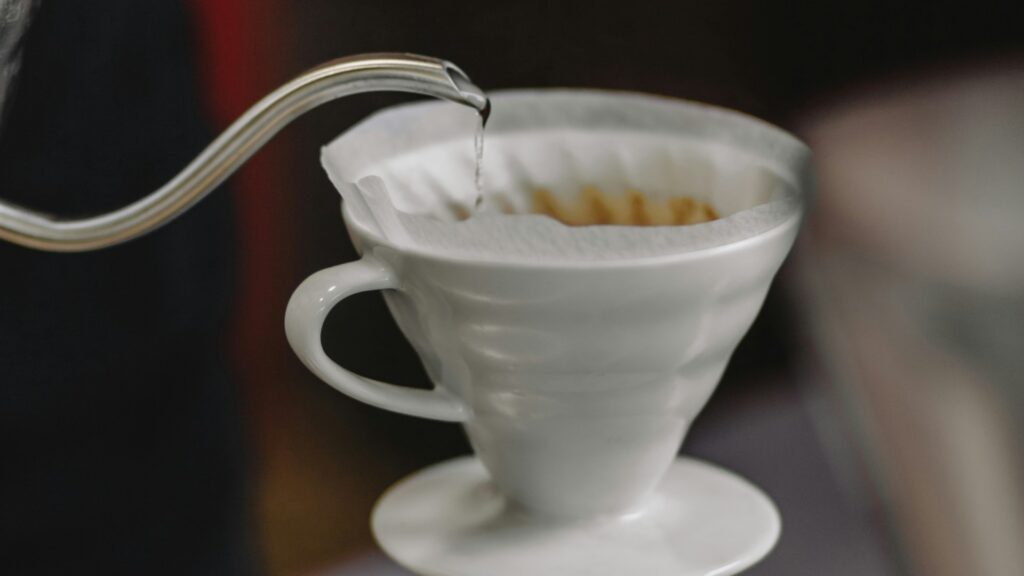
Pour over coffee is a manual brewing method where you pour hot water slowly over coffee grounds held in a paper filter, allowing it to drip into a cup or carafe below. The name is simple: you pour water over the grounds — manually, with control over every variable.
The most popular pour over devices include:
- Hario V60 — cone-shaped with spiral ridges, gives maximum control over flow rate
- Chemex — large, hourglass-shaped brewer with a thick filter that produces a very clean cup
- Kalita Wave — flat-bottom brewer with three small holes, forgiving and consistent
- Melitta — classic cone dripper, affordable and widely available at grocery stores
Why Pour Over Coffee Tastes Different
The paper filter in pour over coffee removes the oils (cafestol and kahweol) that give French press its heavy, full-bodied texture. The result is a lighter, cleaner cup that’s also lower in cholesterol-raising compounds and more delicate in flavor.
Pour over also gives you full control over:
- Water temperature — affects extraction speed and flavor compounds pulled from the grounds
- Pour speed — affects how evenly the grounds extract
- Bloom time — releases CO₂ trapped in fresh beans for more even, complete extraction
No automatic drip machine can replicate this level of control and precision.
Pour Over Coffee Ratio
The standard pour over ratio is 1:15 to 1:17 (coffee to water by weight). This is the sweet spot for most beans and brewing styles.
For a single 12 oz cup:
- 22g coffee (about 3 tablespoons)
- 330ml water (11 oz)
For a 20 oz carafe:
- 35g coffee
- 525ml water
Using a kitchen scale makes a meaningful difference to consistency. The Hario V60 Drip Scale is purpose-built for pour over and shows real-time weight and timer simultaneously. As an Amazon Associate I earn from qualifying purchases.
How to Make Pour Over Coffee (Step-by-Step)
Equipment you need:
- Pour over dripper (V60, Chemex, or similar)
- Paper filter
- Kettle (gooseneck recommended)
- Kitchen scale
- Timer
- Freshly ground coffee, medium-fine grind
Instructions:
- Heat water to 200°F (93°C). Bring water to a boil, then let it sit off the heat for 30–45 seconds. If you have a temperature-controlled kettle, set it to 200°F directly.
- Rinse the filter. Place your paper filter in the dripper and rinse it thoroughly with hot water. This removes papery taste and pre-heats your cup. Discard the rinse water.
- Add your coffee. Add your ground coffee to the wet filter. Give it a gentle shake to level the grounds.
- Bloom for 30 seconds. Start your timer. Pour just enough water to saturate all the grounds — about 2x the weight of coffee (e.g., 44ml for 22g coffee). Let it bloom for 30 seconds. You’ll see the grounds bubble and expand as CO₂ releases — this means your coffee is fresh.
- Pour in stages. Pour water slowly in a circular motion, starting from the center and spiraling outward. Target these milestones: 150ml at :45 seconds, 250ml at 1:15, 330ml at 2:00. Aim to finish all pours by 2:30.
- Wait for drawdown. Let all the water drain through completely. Total brew time should be 3:00–4:00. If it drains faster, use a finer grind next time. If slower, use coarser.
- Serve immediately. Pour over coffee cools quickly. Serve right away for the best flavor experience.
Best Coffee for Pour Over
Light to medium roast single-origin beans shine brightest in pour over. The clean paper filter reveals subtle flavor notes that a dark roast would cover up with smokiness and bitterness.
Top pour over bean choices:
- Ethiopian Yirgacheffe — floral, blueberry, tea-like complexity
- Colombian single-origin — bright citrus, caramel, clean sweetness
- Kenyan AA — blackcurrant, tomato, wine-like acidity
- Guatemalan Antigua — chocolate, almond, mild acidity
For pour over, freshness is critical. Use beans within 2–4 weeks of their roast date and always grind fresh before brewing.
Pour Over vs Drip Coffee Machine
| Pour Over | Auto Drip Machine | |
|---|---|---|
| Flavor clarity | Excellent | Good |
| Control | Full | Limited |
| Brew time | 4–5 minutes | 8–10 minutes |
| Cost | $20–$50 dripper | $30–$200 machine |
| Skill required | Medium | None |
| Serving size | 1–2 cups | 4–12 cups |
Pour over produces a cleaner, more flavorful cup. Auto drip is more convenient for larger quantities or households that need coffee ready without attention.
Gooseneck Kettle: Do You Really Need One?
A gooseneck kettle isn’t strictly required, but it makes pour over significantly easier and more consistent. The narrow, curved spout gives you precise control over pour speed and direction — crucial for even extraction.
A regular kettle can work, but the aggressive flow rate makes it hard to pour slowly in small circles over the grounds. The Fellow Stagg EKG Electric Gooseneck Kettle is the most popular choice among home baristas — it holds temperature precisely and pours beautifully. As an Amazon Associate I earn from qualifying purchases.
Troubleshooting Your Pour Over
Tastes bitter: Usually over-extraction. Try a coarser grind, lower water temperature (195°F instead of 200°F), or pour faster.
Tastes sour or weak: Under-extraction. Try a finer grind, hotter water, or a slower pour to give water more contact time with the grounds.
Drains too fast (under 3 minutes): Grind finer. Water is rushing through without extracting enough flavor.
Drains too slow (over 5 minutes): Grind coarser. Grounds are clogging the filter and over-extracting.
Muddy sediment in cup: Your paper filter has a hole, or you’re using an incompatible filter. Check the filter is seated properly with no folds open at the bottom.
Pour Over Coffee FAQ
What grind size for pour over?
Medium-fine — similar to coarse table salt. Too fine causes over-extraction (bitter); too coarse causes under-extraction (sour, weak).
Can I use regular paper filters?
Yes. If your dripper doesn’t have dedicated filters, Melitta #2 or #4 cone filters work in most devices.
How long does pour over take?
About 4–5 minutes total: 30-second bloom, 2 minutes of active pouring, 1–2 minutes of drawdown.
Is pour over healthier than French press?
Pour over filters out cafestol and kahweol — oils linked to raising LDL cholesterol. For that reason, paper-filtered coffee (including pour over) is generally considered the healthier choice for people monitoring cholesterol.
Can I make iced pour over?
Yes. Place ice in your cup instead of water, then brew directly over it. Use a 1:10 ratio (more concentrated) since the ice dilutes the brew as it melts. This method produces an incredibly bright, flavorful iced coffee.
Pour over coffee takes about 5 minutes of active attention and produces a cup that no machine can match. Once you dial in your ratio and technique, it becomes a genuinely satisfying morning ritual.
If you’re also interested in other manual brewing methods, check out our guide to French press coffee — a full-bodied alternative with a completely different technique and flavor profile.